Ecuador's 10-Hour Workday Reform Sparks Nationwide Protests
 Chip Moreno
GET YOUR ECUADOR VISA HANDLED BY EXPERTS
Trusted by 2,000+ expats • Retirement • Professional • Investor visas
Ecuador's labor landscape just shifted — and the streets are responding.
The Reform
On March 5, 2026, President Daniel Noboa signed executive decree MDT.2026-059, which modifies Ecuador's labor code to allow employers to schedule 10-hour workdays as long as the 40-hour weekly maximum is maintained. Under the previous framework, the standard workday was capped at 8 hours, with anything beyond requiring overtime pay at 1.5x the regular rate.
The new decree permits employers to adopt a 4x10 schedule (four 10-hour days per week) or other flexible configurations, provided total weekly hours do not exceed 40 and the employee receives at least two consecutive rest days per week. Critically, the decree allows employers to implement these schedules without requiring individual worker consent — only notification to the Ministry of Labor (Ministerio de Trabajo) is required.
Overtime pay obligations remain in effect for any hours exceeding 40 per week or 10 per day under the new framework.
Why It Is Controversial
The core objection from labor unions and opposition lawmakers is not the 40-hour cap — it is the process and the power shift:
- No consultation with unions. Ecuador's major labor federations — including the Frente Unitario de Trabajadores (FUT) and the Confederacion de Nacionalidades Indigenas del Ecuador (CONAIE) — were not consulted before the decree was issued. This violates ILO (International Labour Organization) conventions on tripartite dialogue that Ecuador has ratified
- Employer discretion over scheduling. The decree effectively gives employers unilateral power to restructure work schedules. A worker who was hired for 8-hour days can now be required to work 10-hour days with no recourse
- Impact on vulnerable workers. Domestic workers, agricultural laborers, and factory employees — who have limited bargaining power — are most exposed to the change. A 10-hour day of physical labor is materially different from a 10-hour day in an office
- Precedent concerns. Critics argue the decree is a stepping stone toward further labor flexibilization, including potential increases to the 40-hour weekly cap in the future
The Protests
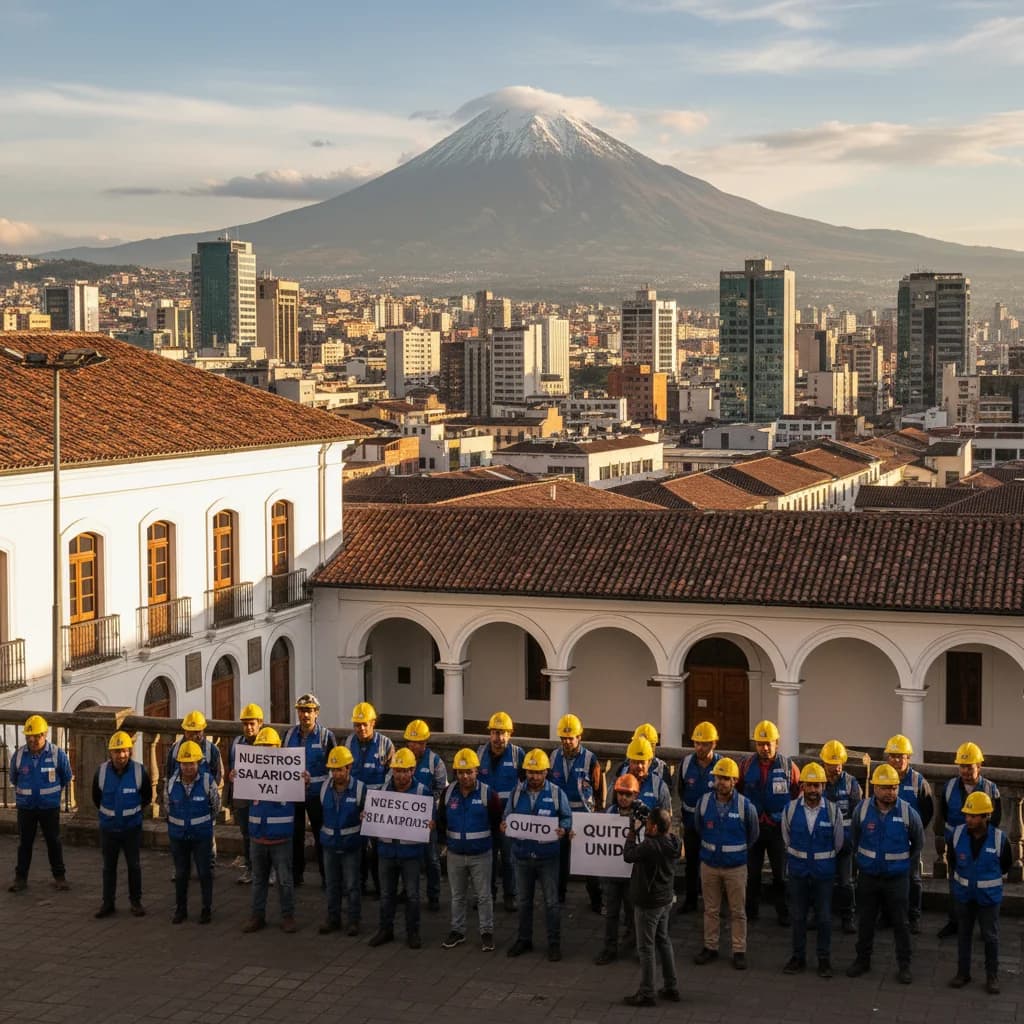
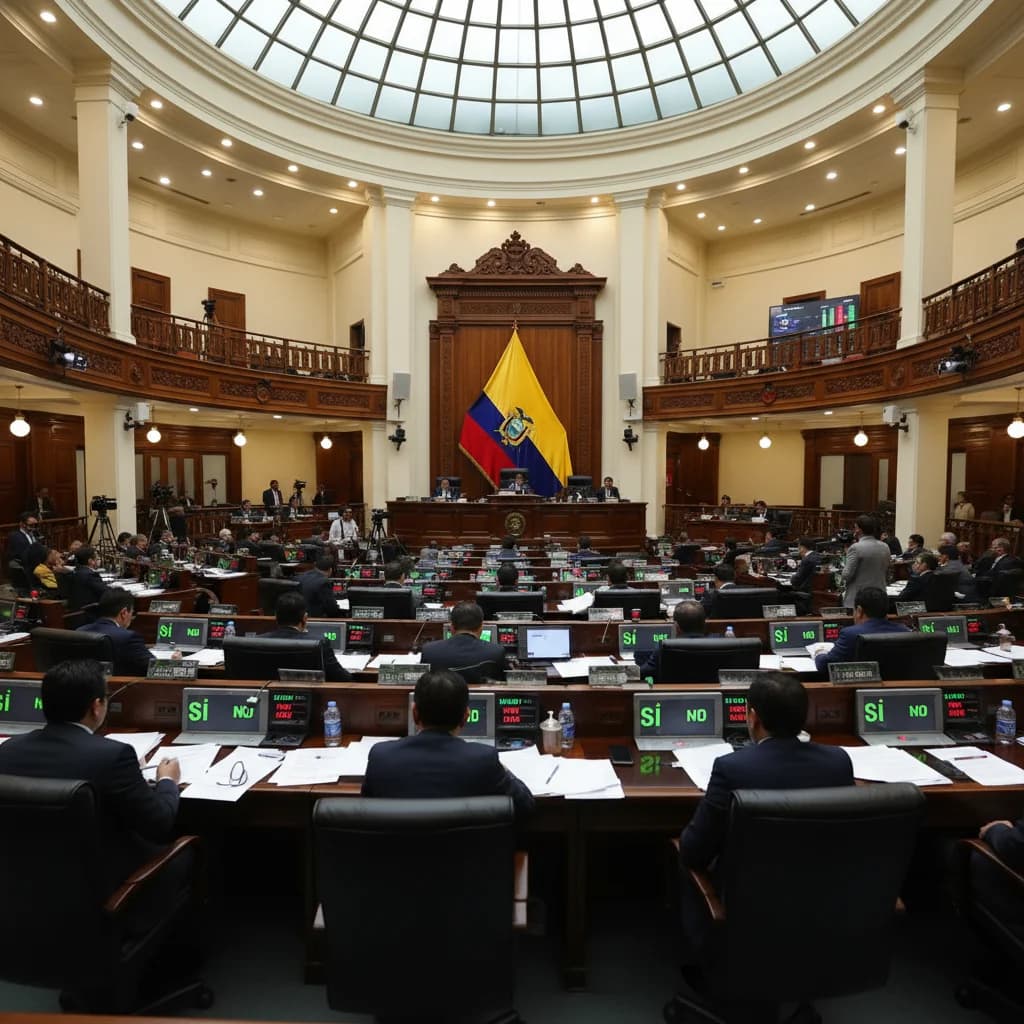
On March 13, 2026, large-scale protests erupted in Quito and Guayaquil, with smaller demonstrations in Cuenca, Ambato, and Riobamba. In Quito, an estimated 15,000-20,000 protesters marched from El Arbolito park to the National Assembly building, demanding the decree be rescinded.
Protest organizers included the FUT, CONAIE, university student federations, and several opposition political parties. The demonstrations were largely peaceful, though police deployed tear gas near the Assembly building after a small group attempted to breach security barriers.
The protests represent the largest labor mobilization since the June 2022 uprising that forced then-President Guillermo Lasso to negotiate with CONAIE on fuel prices and economic policy.
Noboa's Political Position
President Noboa's approval rating has dropped to 38%, according to a Cedatos poll released March 15 — down from 55% in October 2025 and 72% at the peak of his popularity during the January 2024 armed conflict state of emergency.
The labor reform is one of several factors driving the decline:
- The ongoing security crisis and militarization of coastal provinces
- Rising costs from the Colombia trade war
- Perceived authoritarian tendencies in governing by decree rather than through the National Assembly
- A corruption scandal involving a Noboa ally in the customs agency
The government has not indicated any willingness to modify or withdraw the decree.
What This Means for Expats
- If you employ domestic workers (housekeepers, cooks, gardeners, drivers), the new decree technically allows you to schedule 10-hour days. However, proceeding carefully is advisable — imposing longer days without discussion can damage the employment relationship and may face legal challenges if unions successfully contest the decree in court
- If you run a business in Ecuador, you now have more scheduling flexibility. A 4x10 schedule could reduce commuting costs and overhead. But implementing it without employee buy-in risks labor complaints and negative attention, particularly in the current protest environment
- Protests may cause disruptions. If you live in Quito or Guayaquil, be prepared for periodic street closures, transit delays, and potential escalation if the government refuses to negotiate. Cuenca has seen smaller demonstrations but could escalate if CONAIE calls a national mobilization
- Minimum wage context matters. Ecuador's minimum wage is $470/month in 2026. For workers earning this amount, a 10-hour day at the same monthly pay is a meaningful reduction in hourly compensation, even if total hours remain at 40 per week. This fuels legitimate resentment
- Watch for a CONAIE escalation. If CONAIE — which represents Ecuador's indigenous communities and has the organizational capacity to shut down highways and cities — formally joins the protests, the situation could escalate to a national strike. The June 2022 uprising lasted 18 days and caused significant economic disruption
Sources: Peoples Dispatch, Latinoamerica21, El Comercio, Cedatos
More in Politics
View all →Keep practical Ecuador coverage free to read.
Reader support helps fund source monitoring, translation, editing, publishing, and national coverage for expats across Ecuador.
EcuaPass
Your Ecuador Visa, Done Right
Retirement • Professional • Investor • Cedula processing & renewals — start to finish by licensed experts.
Get a Free Consultationecuapass.com
Need help with your Ecuador visa? EcuaPass handles the paperwork for you. Learn more →
Comments
No comments yet. Be the first to share your thoughts!