US-Ecuador Trade Deal Finalized — Zero Tariffs on $3.2 Billion in Exports
 Chip Moreno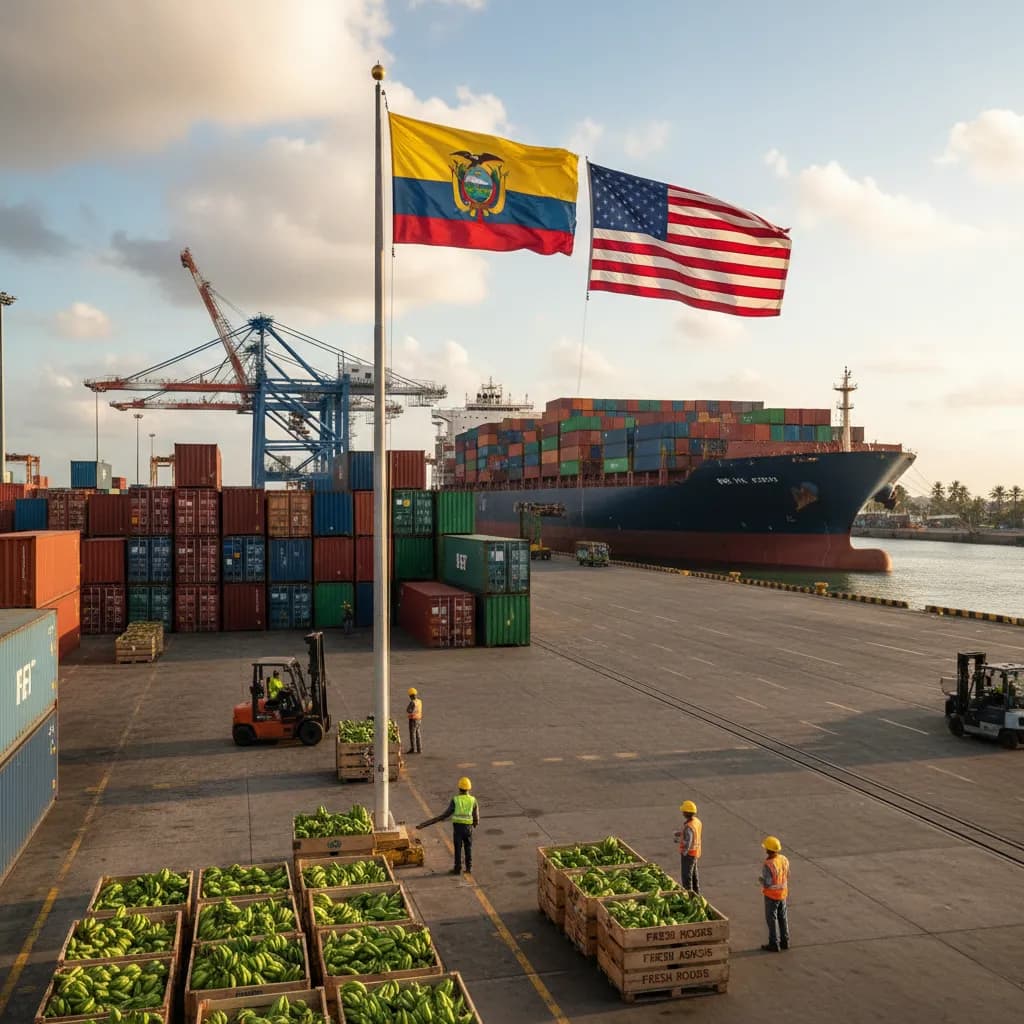
GET YOUR ECUADOR VISA HANDLED BY EXPERTS
Trusted by 2,000+ expats • Retirement • Professional • Investor visas
The biggest US-Ecuador trade development in a decade just landed — and it changes the math for both countries.
The Deal
On February 13, 2026, the United States Trade Representative (USTR) and Ecuador's Ministry of Production, Foreign Trade, Investment, and Fisheries announced the successful conclusion of negotiations on an Agreement on Reciprocal Trade (ART). The agreement eliminates the 15% surcharge that had been applied to approximately 50% of Ecuador's non-petroleum exports to the United States, covering goods valued at $3.2 billion annually.
This is not a traditional free trade agreement — it is a targeted bilateral instrument under the framework of the US Trade Act. The ART specifically addresses tariff reciprocity, meaning Ecuador agrees to lower barriers on American goods entering Ecuador in exchange for preferential access to the US market.
What Products Are Covered
The ART covers a wide swath of Ecuador's agricultural and industrial export portfolio:
| Product Category | Annual Export Value to US | Previous Tariff | New Tariff Under ART | |-----------------|-------------------------|----------------|---------------------| | Cut flowers (roses) | ~$900M | 6.8% + 15% surcharge | 0% | | Bananas | ~$650M | 0% (GSP) + 15% surcharge | 0% | | Cacao & chocolate | ~$400M | Various + 15% surcharge | 0% | | Blueberries | ~$180M | 2.5% + 15% surcharge | 0% | | Tuna & seafood | ~$350M | Various + 15% surcharge | 0% | | Avocados | ~$120M | 11.2 cents/kg + 15% surcharge | 0% | | Dragon fruit | ~$95M | Various + 15% surcharge | 0% | | Minerals (non-petroleum) | ~$300M+ | Various + 15% surcharge | 0% |
Ecuador's flower industry — the third-largest in the world behind the Netherlands and Colombia — stands to benefit most. Rose exports alone account for roughly $900 million in annual trade with the US, and the elimination of tariffs makes Ecuadorian roses significantly more price-competitive against Colombian flowers, which already enjoy zero-tariff access under the US-Colombia Trade Promotion Agreement.
The 10% Global Tariff Context
The ART becomes especially valuable in light of the new 10% global tariff surcharge that the United States imposed on February 4, 2026, on virtually all imports from countries without bilateral trade agreements. This surcharge applies to goods from most of the world — but Ecuador's ART shields qualifying exports from the additional levy.
In practical terms, this means Ecuadorian exporters now have a 10-percentage-point price advantage over competitors in countries that lack similar agreements. For price-sensitive agricultural commodities like bananas and flowers, that margin can be the difference between winning and losing major contracts with US importers.
Ecuador's Growth Projections
Ecuador's Trade Minister Daniel Jaramillo projected during the announcement ceremony that the ART will drive 15% annual growth in exports to the United States through 2030. If realized, that would push Ecuador's non-petroleum exports to the US from $3.2 billion to approximately $6.4 billion within five years.
The growth projection is ambitious but grounded in several factors:
- Ecuador's agricultural sector has massive underutilized capacity, particularly in cacao, blueberries, and dragon fruit
- Flower farms in the highlands (primarily in Cayambe, Latacunga, and Ambato) can expand production relatively quickly
- Seafood processing capacity along the coast has room to scale, particularly for value-added tuna products
- The mineral exports category is poised for significant growth as new mining projects come online (see related: Lundin Gold's $100M exploration investment)
What Ecuador Gives Up
Reciprocity means Ecuador must also lower barriers on American goods entering the country. While the full schedule of Ecuadorian tariff reductions has not been publicly released, preliminary reports indicate concessions in the following categories:
- Machinery and industrial equipment — reduced import duties expected to lower costs for Ecuadorian manufacturers
- Health and pharmaceutical products — tariff reductions on US-manufactured medications and medical devices
- Wine and spirits — reduced duties on American wines, whiskey, and other spirits
- Agricultural inputs — lower tariffs on US-made fertilizers, seeds, and farming technology
- Technology products — reduced import costs for US-manufactured electronics and software
For Ecuador's consumers, this translates to lower prices on imported American goods — a tangible benefit in a dollarized economy where import costs directly affect retail prices.
The Geopolitical Dimension
The ART is not just about trade — it is a geopolitical signal. Ecuador under President Daniel Noboa has made a decisive pivot toward the United States and away from the China-aligned posture of previous administrations. The trade deal arrives alongside:
- The US designation of Ecuador's minerals as strategically critical (see related article)
- Ongoing US military and police cooperation on Ecuador's security crisis
- USAID programs worth over $100 million annually
- Ecuador's pending application for OECD membership, which the US supports
For Washington, Ecuador represents a reliable partner in a region where several countries — including Colombia under Petro — have complicated relationships with the United States. The ART cements Ecuador's position as a preferred US trading partner in South America.
What This Means for Expats
- Imported American products should get cheaper. If the tariff reductions on US goods entering Ecuador are meaningful, expats can expect to see lower prices on American wines, spirits, health products, and technology. The timeline for these reductions to reach store shelves will depend on how quickly the agreement is ratified and implemented
- The deal signals long-term US-Ecuador stability. For expats who worry about political risk, a formal bilateral trade agreement creates institutional ties that survive changes in government. Both countries now have economic incentives to maintain the relationship
- Ecuador's economy gets a boost. A 15% growth rate in exports to the US means more jobs, more government revenue, and a stronger economy — all of which benefit residents, including expats. The flower and agricultural sectors in the highlands, the seafood industry on the coast, and the mining sector in the south and east all stand to gain
- Dollar-based purchasing power is reinforced. Because Ecuador uses the US dollar, the trade deal strengthens the economic foundations of dollarization. More dollar-denominated export revenue flowing into Ecuador supports the monetary system that makes Ecuador attractive to American and European expats
- Watch the wine and spirits market. If tariffs on American wines and whiskey drop, the selection and pricing of US brands in Ecuador's supermarkets and liquor stores should improve. Currently, Ecuadorian import duties make American wines significantly more expensive than Chilean or Argentine alternatives
- Real estate sentiment may strengthen. Foreign investment flows — driven by both the trade deal and strategic minerals designation — tend to increase confidence in Ecuador's economic trajectory, which supports property values in expat-heavy areas like Cuenca, Quito, and the coast
Sources: United States Trade Representative (USTR), Ministerio de Produccion Comercio Exterior Inversiones y Pesca, El Universo
More in Economy
View all →Keep practical Ecuador coverage free to read.
Reader support helps fund source monitoring, translation, editing, publishing, and national coverage for expats across Ecuador.
EcuaPass
Your Ecuador Visa, Done Right
Retirement • Professional • Investor • Cedula processing & renewals — start to finish by licensed experts.
Get a Free Consultationecuapass.com
Need help with your Ecuador visa? EcuaPass handles the paperwork for you. Learn more →
Comments
No comments yet. Be the first to share your thoughts!