Pawkar Raymi — Ecuador's Ancient Festival of Flowering Celebrates the Spring Equinox Near Otavalo
 Chip Moreno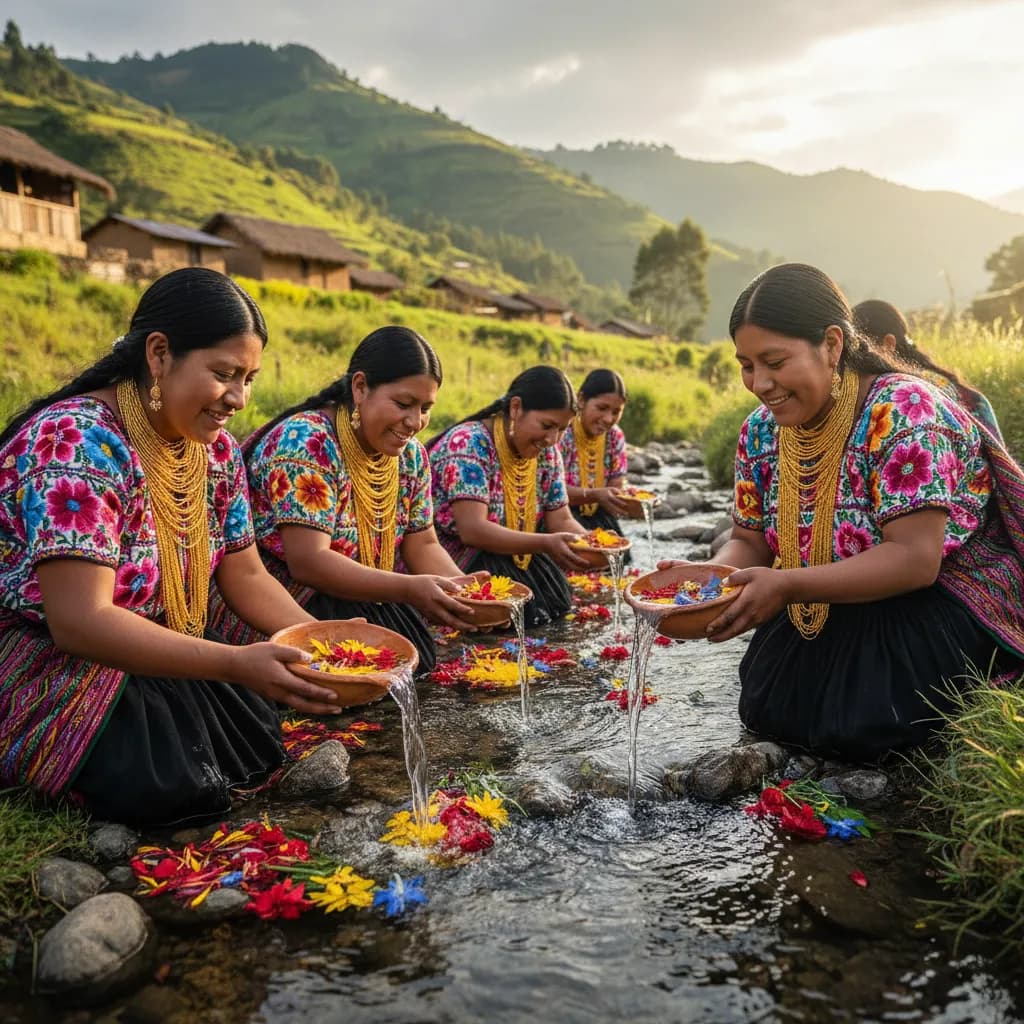
GET YOUR ECUADOR VISA HANDLED BY EXPERTS
Trusted by 2,000+ expats • Retirement • Professional • Investor visas
Before the Spanish, before the Inca, before written history — the people of the Andes celebrated the flowering of the earth. They still do.
What Is Pawkar Raymi
Pawkar Raymi (also spelled Pawcar Raymi) is one of the four great Andean festivals tied to the agricultural and solar calendar. The name comes from Kichwa: "Pawkar" means flowering or blossoming, and "Raymi" means festival or celebration. It marks the time when the crops planted months earlier begin to flower — a signal that the harvest will come, that the earth is generous, and that Pacha Mama (Mother Earth) is fulfilling her promise.
The four Andean Raymis form a complete annual cycle:
| Festival | Timing | Meaning | |----------|--------|----------| | Pawkar Raymi | March equinox | Festival of Flowering | | Inti Raymi | June solstice | Festival of the Sun / Harvest | | Koya Raymi | September equinox | Festival of Fertility / Femininity | | Kapak Raymi | December solstice | Festival of Leadership / Renewal |
Pawkar Raymi is celebrated across indigenous communities in the Ecuadorian highlands, but its most significant and accessible celebration takes place in the communities around Otavalo, in Imbabura Province — particularly in the village of Peguche, approximately 3 kilometers from Otavalo's center.
When and Where in 2026
Pawkar Raymi celebrations are centered around the March equinox (approximately March 20-21, 2026), but festivities can span 10 days or more in the most active communities. In Peguche, events typically begin in mid-March and continue through the end of the month.
Key locations:
- Peguche — the primary celebration site, a small Kichwa community famous for its textile weaving tradition and the nearby Peguche Waterfall (Cascada de Peguche), which holds sacred significance
- Otavalo — the nearby market town (famous for the largest indigenous market in South America) hosts complementary events and serves as a base for visitors
- Cotacachi — indigenous communities in this nearby town also celebrate Pawkar Raymi
- Various highland communities from Imbabura south through Cotopaxi, Tungurahua, and Chimborazo hold their own observances
What Happens During Pawkar Raymi
The Tumarina Ritual
The most distinctive and sacred element of Pawkar Raymi is the Tumarina — a ritual cleansing and blessing ceremony. Participants gather at natural water sources (often the Peguche Waterfall) where community elders bless attendees by pouring flower-infused water over their heads and hands. The flowers — typically roses, carnations, and native wildflowers — represent the blooming earth. The water represents purification and renewal.
The Tumarina is open to visitors, including foreigners, but should be approached with respect. It is a spiritual ceremony, not a performance.
Music and Dance
Pawkar Raymi features traditional Andean music performed on quenas (bamboo flutes), zamponas (pan pipes), charangos (small string instruments), and bombos (drums). Dance groups perform choreography that represents agricultural cycles, courtship, and cosmic harmony.
Modern elements have been incorporated as well — you may hear contemporary Kichwa-language music alongside traditional instrumentation.
Sporting Events
A distinctive feature of Pawkar Raymi is the inclusion of inter-community sporting competitions, particularly futbol (soccer) tournaments that draw teams from Kichwa communities across the highlands. These tournaments are intensely competitive and serve as a modern expression of the communal gathering traditions that have always been part of the festival.
The Pawkar Nusta
The Pawkar Nusta (Nusta means princess or maiden in Kichwa) is selected to represent the spirit of the flowering season. The selection is not a beauty contest in the Western sense — candidates are evaluated on their knowledge of Kichwa language and culture, their community involvement, and their ability to represent indigenous values. The crowning ceremony is a highlight of the celebration.
Communal Feasting
Pawkar Raymi features communal meals with traditional highland foods: mote (hominy), cuy (roasted guinea pig), papas (potatoes prepared in various traditional styles), choclo (large-kernel Andean corn), and of course chicha (fermented corn drink). These meals are often shared openly with visitors.
Getting There From Major Expat Cities
| From | Distance | Travel Time | Notes | |------|----------|------------|-------| | Quito | ~95 km | ~2 hours by bus or car | Frequent buses from Terminal Carcelen | | Cuenca | ~450 km | ~8-9 hours by bus | Overnight bus or fly to Quito and drive | | Cotacachi | ~12 km | ~20 minutes | Very close — many Cotacachi expats attend |
Otavalo has a range of accommodation from budget hostels to boutique hotels. Peguche itself has a few guesthouses. The Saturday market in Otavalo — one of the most famous indigenous markets in the Americas — makes the trip doubly worthwhile.
What This Means for Expats
- This is the most authentic indigenous cultural experience available in Ecuador. Unlike tourist-oriented performances, Pawkar Raymi is a living celebration conducted by and for the Kichwa community. Your presence as a respectful visitor is welcomed, but this is their festival — follow their lead
- It coincides with the equinox at the equator. Ecuador literally means "equator," and experiencing an equinox celebration in a country named for the equator, among people who have marked this astronomical event for millennia, is profoundly meaningful
- Otavalo market makes it a perfect weekend trip. Combine Pawkar Raymi (mid-to-late March) with a Saturday visit to the Otavalo market for textiles, crafts, and food. Stay in Otavalo or Cotacachi and make it a 2-3 day trip
- Respect the ceremony. Ask before photographing sacred rituals. Do not treat the Tumarina as a selfie opportunity. Accept offerings of food and chicha graciously. Dress modestly. These are basic courtesies that will be appreciated
- The Cotacachi and Otavalo expat community is welcoming. Northern highlands expats (Cotacachi, Otavalo, Ibarra) are a tight-knit group who often attend Pawkar Raymi together. If you are new to the area, reach out to local expat groups for guidance and companionship
- Learn a few Kichwa words. "Alli puncha" (good day), "Yupaychani" (thank you), and "Sumak kawsay" (good living / the good life) will be appreciated and will open doors
Sources: Happy Gringo Travel, Ecuador Ministry of Tourism, Otavalo Tourism Office
More in Breaking
View all →Keep practical Ecuador coverage free to read.
Reader support helps fund source monitoring, translation, editing, publishing, and national coverage for expats across Ecuador.
EcuaPass
Your Ecuador Visa, Done Right
Retirement • Professional • Investor • Cedula processing & renewals — start to finish by licensed experts.
Get a Free Consultationecuapass.com
Need help with your Ecuador visa? EcuaPass handles the paperwork for you. Learn more →
Comments
No comments yet. Be the first to share your thoughts!