Total Lunar Eclipse on March 3 — Where and When to Watch the 'Blood Moon' From Ecuador
 Chip Moreno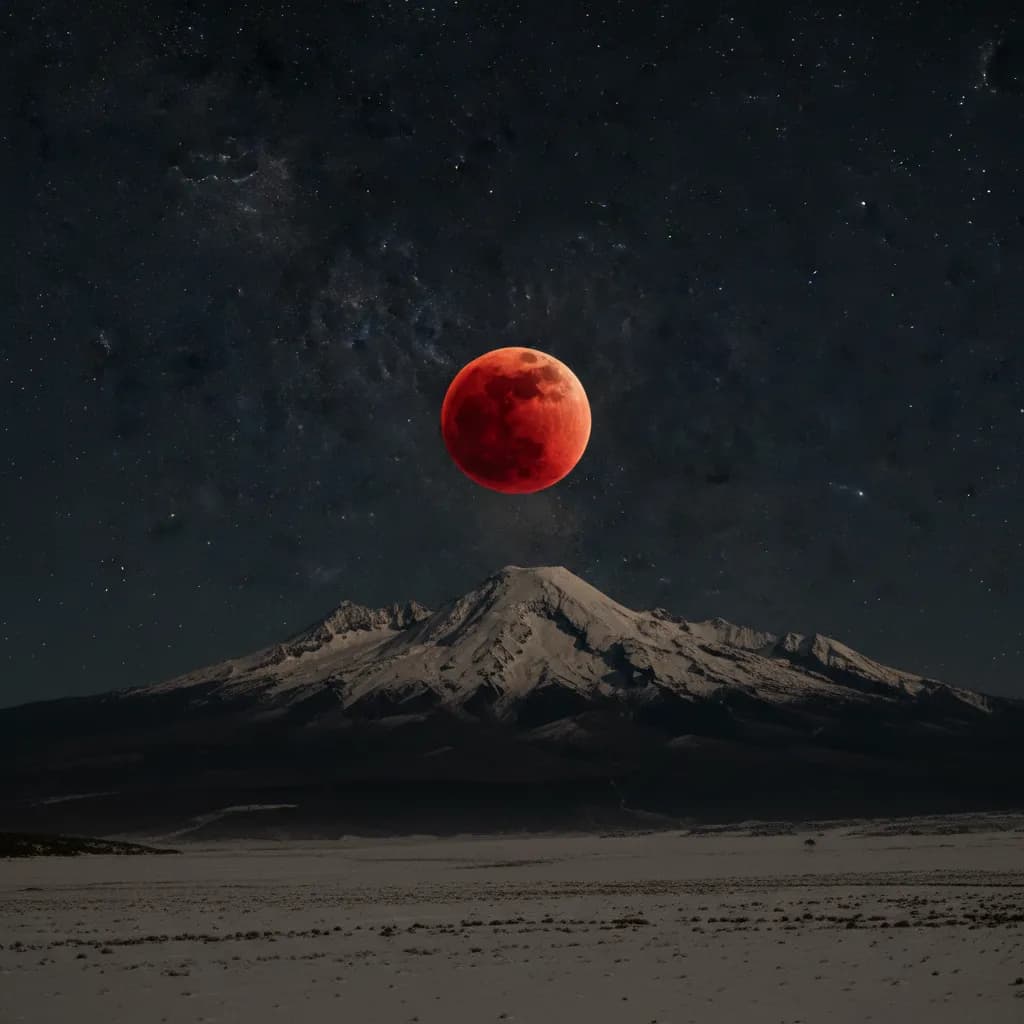
GET YOUR ECUADOR VISA HANDLED BY EXPERTS
Trusted by 2,000+ expats • Retirement • Professional • Investor visas
Mark your calendar — the sky is putting on a show, and Ecuador has front-row seats.
What Is Happening
On March 3, 2026, a total lunar eclipse will be visible across the entire territory of Ecuador. During the eclipse, the Earth passes directly between the Sun and the Moon, casting its shadow onto the lunar surface. As the Moon enters the deepest part of the shadow (the umbra), it does not go dark — instead, it turns a striking deep red or copper color, earning the popular name "Blood Moon" (or "Luna de Sangre" in Spanish).
The red color occurs because Earth's atmosphere bends sunlight around the planet's edge, filtering out blue wavelengths and allowing red light to reach the Moon. It is the same physical phenomenon that makes sunsets red — except projected onto the lunar surface.
Timing for Ecuador
All times below are in Ecuador local time (ECT / UTC-5):
| Phase | Time (approx.) | |-------|----------------| | Penumbral eclipse begins | ~5:50 PM | | Moonrise in Ecuador | ~6:04 PM (varies by city) | | Partial eclipse begins | ~6:09 PM | | Total eclipse begins | ~7:25 PM | | Maximum eclipse | ~7:58 PM | | Total eclipse ends | ~8:31 PM | | Partial eclipse ends | ~9:42 PM | | Penumbral eclipse ends | ~10:44 PM |
The total duration of the eclipse from first penumbral contact to last is approximately 5 hours and 39 minutes. The period of totality — when the Moon is fully immersed in Earth's shadow and turns red — lasts approximately 58 minutes.
Important timing note: The Moon rises in Ecuador at approximately 6:04 PM, which means the penumbral phase will already be underway when the Moon appears above the eastern horizon. The partial eclipse begins almost immediately after moonrise, and the dramatic total phase starts around 7:25 PM — giving viewers the experience of watching the Moon rise and then turn blood-red within the first 90 minutes of darkness.
Where to Watch
The eclipse is visible from everywhere in Ecuador — no special location is required. Simply find a spot with a clear view of the eastern horizon (where the Moon rises) and minimal light pollution.
Best Viewing Locations by Region
Cuenca and the Southern Highlands:
- Turi viewpoint — elevated position with panoramic eastern views, likely to attract crowds
- Cajas National Park — high altitude (3,500-4,000m) with virtually zero light pollution. Dress extremely warmly — nighttime temperatures at altitude can drop below freezing
- Icto Cruz viewpoint — lesser-known alternative to Turi with similar views
Quito:
- Parque Itchimbia — hilltop park with clear eastern horizon
- Cotopaxi National Park — if you are up for a drive, the altitude and darkness are unbeatable
- Mitad del Mundo — watch a Blood Moon from the equator for the story alone
Coast:
- Any beach with an eastern-facing view — the Moon rises over the ocean along parts of the coast
- Montanita, Puerto Lopez, or Canoa — beach towns where you can watch from the sand
Amazon:
- If you happen to be in the Oriente, the low-altitude jungle offers a unique perspective, though cloud cover can be an issue
What You Need
Unlike a solar eclipse, a lunar eclipse requires no special equipment to view safely. You can watch with the naked eye without any risk of eye damage. That said, here is what will enhance the experience:
- Binoculars — even basic binoculars dramatically improve the view, revealing the Moon's surface features in red shadow
- Camera with manual settings — smartphones can capture the eclipse, but a camera with manual exposure control will produce far better results. Use a tripod and experiment with 1-4 second exposures
- Warm clothing — March evenings in the highlands can be cool (10-15C / 50-59F in Cuenca, colder at altitude)
- A chair or blanket — you will be looking up for a while
- Snacks and hot drinks — make an evening of it
What This Means for Expats
- This is a free, world-class spectacle. No tickets, no reservations, no travel required. Just walk outside, look east, and watch the Moon turn red. It is one of those experiences that reminds you why living in Ecuador — with its clear highland skies and equatorial position — is special
- Community viewing events are likely. Check local expat Facebook groups, Cuenca expat forums, and community boards for organized viewing gatherings. These are wonderful social opportunities, especially for newer expats looking to connect
- The highlands have the best seats. Cuenca, Quito, Vilcabamba, Otavalo, and other highland cities benefit from altitude (less atmospheric distortion) and generally clearer skies than the coast during March
- Share it with Ecuadorian friends and neighbors. Lunar eclipses carry cultural significance in Andean traditions. In some indigenous communities, eclipses are associated with Pacha Mama and cosmic balance. It is a beautiful opportunity for cross-cultural conversation
- Great photo opportunity. If you run a blog, social media account, or just want to send an incredible photo home, a Blood Moon over Cuenca's colonial skyline or the Andes is hard to beat
Sources: TimeandDate.com, NASA Eclipse Page, INAMHI
More in Breaking
View all →Keep practical Ecuador coverage free to read.
Reader support helps fund source monitoring, translation, editing, publishing, and national coverage for expats across Ecuador.
EcuaPass
Your Ecuador Visa, Done Right
Retirement • Professional • Investor • Cedula processing & renewals — start to finish by licensed experts.
Get a Free Consultationecuapass.com
Need help with your Ecuador visa? EcuaPass handles the paperwork for you. Learn more →
Comments
No comments yet. Be the first to share your thoughts!